

Main Points
- Most households need septic tank pumping every three to five years.
- Look for warning signs like slow drains, gurgling pipes, and pooling water near the leach field.
- More people in your household accelerate your septic tank pumping frequency.
- Regular pumping protects your septic field, extends your system’s lifespan, and helps you avoid emergency repairs.
Why Septic Pumping Timing Matters
Knowing how often to pump a septic tank means the difference between a system that runs efficiently for decades and one that unexpectedly backs up into your home. Keeping up with a regular septic tank maintenance schedule saves money, protects your property, and keeps your family safe from the health risks that come with sewage exposure.
How Often Should You Pump a Septic Tank?
Most households with about four people need septic tank pumping every three to five years. The Oregon Department of Environmental Quality advises pumping once sludge and scum accumulation reach roughly one-third to 40% of tank volume.
If you’re unsure when to pump a septic tank, combine regular inspections with a pumping schedule based on household size and usage. A household with one or two people may only need septic tank pumping every five years, whereas a home with seven or more residents may benefit from an annual septic pumping schedule.
Septic Pumping Estimator
Customized for your household
*Estimated frequency. For a precise check, book a professional 21-point inspection.
What Happens If You Wait Too Long to Pump a Septic Tank?
Putting off pumping too long means the tank loses its ability to separate waste. Solids push into the leach field and clog the soil. At that point, you're dealing with field repairs or full system replacement for tens of thousands of dollars.
An overloaded system can contaminate groundwater and create sanitary hazards in your yard. In communities like Eagle Creek and Estacada, where many homes rely on wells, that's a serious concern. Routine pumping protects your property and your water.
Can You Check a Septic Tank Yourself?
Watch for the external warning signs above and keep track of when your tank was last pumped and how many people have been using the system. This helps to personalize your septic tank maintenance schedule.
What you shouldn't do is open the tank yourself. Septic tanks contain dangerous gases and oxygen-deficient environments that can be extremely hazardous. Checking sludge levels and evaluating the condition of inlet and outlet baffles requires professional equipment and training.
When Should You Call a Septic Professional?
Call if it's been more than three years since your last service, if your household has grown, or if you've noticed any of the warning signs above. You should also book a professional septic tank inspection near you before buying or selling a home with a septic system.
Speedy Septic's septic services include a complimentary 21-point system health analysis with every pump job, covering the tank, leach field, and distribution box.
Septic Pumping vs. Septic Cleaning: Is There a Difference?
Homeowners often ask how often a septic tank should be cleaned versus pumped. Most systems need routine pumping every three to five years, while full tank cleaning is usually reserved for heavy buildup or neglected systems.
Pumping removes the liquid, sludge, and scum from the tank. Septic tank cleaning involves power-washing interior walls and scrubbing residue from the tank's surfaces and components. Cleaning is a more thorough reset for the system.
Factors That Affect Septic Pumping Cost
Septic tank cleaning frequency and cost vary based on your specific situation. A straightforward appointment with easy lid access and moderate sludge levels costs less than a job involving buried lids, heavy buildup, or emergency dispatch.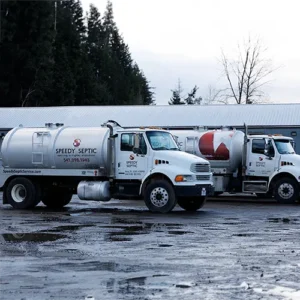
The main cost factors include:
- Tank size
- Ease of access
- Sludge volume
- Tank condition and repair needs
- Same-day or emergency service
How to Make Your Septic System Last Longer
Septic tank pumping on schedule is the biggest thing you can do, but daily habits matter too.
- Spread laundry loads throughout the week.
- Avoid flushing anything other than toilet paper.
- Use water-efficient fixtures to reduce daily flow into the tank.
- Avoid parking or planting trees over the septic field.
- Don't pour cooking grease, harsh cleaners, or antibacterial products down the drain.
- Keep a record of pump dates and service history.
Speedy Septic offers eco-friendly services, sending pumped material for safe recycling and agricultural reuse rather than landfill disposal.
Why Septic Pumping Is Important for Eagle Creek and The Dalles Homes
Heavy rainfall in the Columbia Gorge can saturate soil around leach fields. Rocky terrain in Northern Oregon can limit septic field depth and capacity. In rural areas, the septic system is the only wastewater solution you have.
For homeowners in Eagle Creek, The Dalles, and surrounding communities, staying on top of a regular pumping schedule is the main line of defense between a functioning system and a costly failure.
How Speedy Septic Can Help
Speedy Septic has been serving Oregon and Washington for more than 40 years. We operate one of the largest fleets of service trucks in Oregon, which means faster response times and flexible scheduling.
Our technicians are licensed, bonded, and insured, and Speedy Septic is one of Oregon's leading providers of certified septic inspections. See what homeowners across the region have to say in our customer reviews.
Ready to book a septic pumping service? Contact us today for a professional system evaluation.
Frequently Asked Questions
Is pumping a septic tank every three years enough?
For many average-sized families with standard tanks, septic tank pumping every three years is appropriate. Larger households or smaller tanks need more frequent service.
Can a septic tank go 10 years without pumping?
Going 10 years without pumping is rarely safe and risks serious damage to the leach field. Solids will likely have breached the septic field long before that point, potentially requiring expensive repairs or full system replacement.
Do vacation homes need septic pumping as often as full-time homes?
No, a vacation home used seasonally will fill much more slowly than a full-time residence. Many vacation property owners pump every seven to 10 years, though a professional inspection can confirm the right interval.
Can heavy rain make a septic tank fill faster?
Heavy rainfall doesn't directly add waste to the tank, but it can saturate the soil around the leach field. This slows drainage and creates pressure on the system.
How often should septic systems be inspected?
Most professionals recommend a septic tank inspection every one to three years. Regular inspections catch developing issues before they become costly failures.
How Often Should You Pump a Septic Tank in Portland OR and Vancouver WA?
Also Serving Customers In These Regions
