
Key Points
- Drain field replacement and repair restores performance for failing septic systems.
- Wet grass, sewage odors, slow drains, gurgling toilets, and backups often point to Drain field failure.
- Our licensed, bonded, and insured team brings more than 40 years of local septic experience to every job.
Speedy Septic provides Drain field replacement and repair services for properties dealing with slow drains, unpleasant sewage odors, and backups. Drain field problems can spread quickly throughout a septic system, which is why our team is ready to assist homes and businesses throughout Eagle Creek and nearby Oregon and Washington.
Professional Drain Field Replacement and Repair for Septic Systems
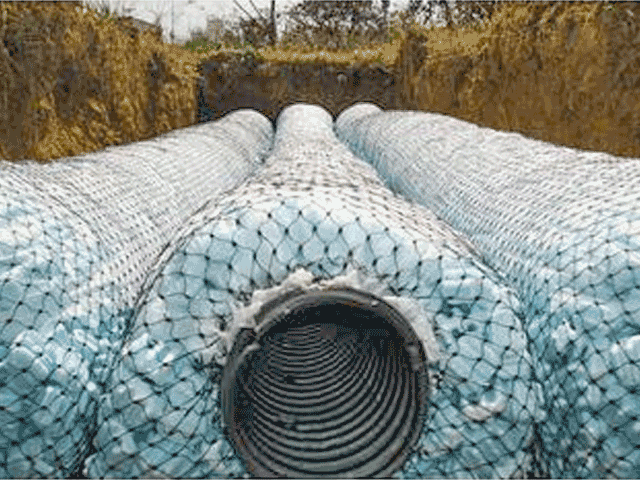
At Speedy Septic, we offer professional Drain field replacement and repair for residential and commercial septic systems. A septic drain field, also known as a leach field or disposal field, is an underground system consisting of leaching chambers or perforated pipes where wastewater from the septic tank is treated then absorbed into the soil.
Signs You May Need Drain Field Repair or Replacement
Here are some signs you might have leach field drainage issues.
- Wet spots or standing water on your lawn
- Patches of lush green grass
- Sewage odors
- Sewage backups
- Gurgling toilets
- Frequent septic tank pumping
- Slow drains
Is It a Septic Tank Problem or a Drain Field Problem?
A septic tank problem often starts with excess sludge, inlet or outlet issues, or a maxed out tank. If the tank can’t divert solids, wastewater may carry debris into the Drain field.
A Drain field problem usually presents as oversaturated soil, sewage odors, backups, or slow drains even after recent septic pumping. Speedy Septic inspects both the tank and Drain field to accurately identify the problem and ensure that homeowners get the right services for their property.
Common Causes of Drain Field Failure
Drain field failure refers to when the septic field can’t absorb wastewater properly, and there are several common causes:
- Soil conditions: Compacted or saturated soil can stop wastewater from dispersing properly through the Drain field.
- High water demand: Heavy use can push more wastewater into the Drain field than the soil can absorb.
- Neglected maintenance: Infrequent septic pumping allows sludge and scum to build up, increasing the risk of Drain field damage.
- Excess solids: When a septic tank gets too full, solids can move into the Drain field and block wastewater flow.
- Biomat overgrowth: A thick biomat layer can slow drainage and keep wastewater from moving into the surrounding soil.
| Failure Factor | System Impact & Soil Mechanics | Primary Operational Risk |
|---|---|---|
| Soil Conditions Ground Saturation |
Compacted or heavily saturated earth structures collapse the natural pocket zones required to accept and handle processed home utility output. | Dispersal Failure: Completely stops wastewater from dispersing properly straight through the Drain field grid. |
| High Water Demand Volume Surcharges |
Heavy unmanaged household liquid use inputs sudden, rapid fluid volumes downstream into the outdoor absorption networks without adequate rest timelines. | Soil Overload: Pushes far more wastewater down than the surrounding natural yard dirt can safely absorb. |
| Neglected Maintenance Service Neglect |
Skipping your property’s routine septic system checkups allows thick bottom sludge and top scum levels inside the primary vessel to expand completely unmanaged. | Systemic Damage: Infrequent septic pumping significantly accelerates your long-term risk of physical field damage. |
| Excess Solids Particulate Escape |
Whenever the central holding tank reaches a maximum volume limit, it loses separation physics and begins bypassing heavy solid waste material out into clean channels. | Flow Blockage: Pushes heavy physical debris into perforated holes, permanently blocking wastewater flow. |
| Biomat Overgrowth Bacterial Skin |
An unmanaged, overly thick anaerobic bacteria slime skin naturally develops along the gravel line, forming an absolute chemical seal over the natural filtering soils. | Slow Drainage: Drastically reduces absorption rates and completely keeps wastewater from entering the outer ecosystem. |
Drain Field Repair vs. Drain Field Replacement
Septic Drain field repair is often practical for more minor problems and relatively new systems with usable life remaining. Leach field repair may address localized damage, distribution issues, or conditions that limit wastewater movement.
Drain field replacement is potentially a better option if the existing field can’t absorb wastewater safely. Leach field replacement may also be necessary in cases of an older system or poor soil conditions.
What Happens During a Drain field Service Visit?
A Drain field service visit starts with a septic system evaluation to identify the cause of the drainage problem. Our technicians inspect the septic tank and Drain field condition to determine the underlying issue and recommend the next step. Depending on the system condition, we may recommend septic pumping, Drain field repair, or septic field replacement.
Benefits of Professional Drain field Repair and Replacement
Professional septic field repair and replacement services help restore safer wastewater drainage and reduce the risk of backups, property damage, and sanitation concerns. Licensed septic technicians can identify problems accurately and recommend leach field installation or repairs tailored to your system.
DIY septic work or delayed service can worsen drainage problems and increase future repair costs. Speedy Septic gives homeowners a safer and more reliable path that comes with licensed service, local experience, and clear recommendations.
Factors That Influence Drain field Repair and Replacement Costs
Septic system Drain field repair and replacement costs depend on various factors, including:
- Service type
- System size
- Soil and site condition
- Damage severity
Same-Day and Emergency Septic Service for Urgent Drain field Problems
Speedy Septic provides same-day and emergency septic service for urgent Drain field problems that threaten your property and plumbing system. Fast response helps homeowners address septic drainage failures. We’re available 24 hours a day, seven days a week to perform drain field repairs for urgent scenarios like:
- Sewage or standing water over the Drain field.
- Backups inside the home.
- Strong sewage odors.
How to Protect Your New or Repaired Drain field
Proper maintenance and responsible water use protect your Drain field and prevent unnecessary strain on the septic system. Try these tips:
- Schedule routine septic pumping.
- Avoid driving or parking over the Drain field.
- Manage excessive household water use.
- Remove trees and roots near septic lines.
- Fix plumbing leaks promptly.
- Avoid flushing grease or non-flushable materials.
- Schedule regular septic inspections.
Why Homeowners Choose Speedy Septic
Speedy Septic has served Oregon and Washington communities for more than 40 years with septic repair, pumping, inspections, Drain field installation, and emergency septic services. Our technicians understand the drainage conditions, soil challenges, and septic system needs common throughout Eagle Creek. Homeowners and businesses who choose our team also enjoy these perks:
- Licensed, bonded, and insured technicians
- 24/7 customer service
- Green approach to septic pumping
- Commitment to speed, integrity, and quality workmanship
Drain field Repair and Replacement Service Areas
Speedy Septic provides Drain field repair, septic Drain field replacement, and related septic services throughout Oregon and Washington.
Portland/Vancouver Metro
- Eagle Creek, OR 97022
- Portland, OR
- Gresham, OR
- Troutdale, OR
- Sandy, OR
- Cascade Locks, OR
- Clackamas, OR
- Happy Valley, OR
- Oregon City, OR
- Canby, OR
- Molalla, OR
- Beaverton, OR
- Hillsboro, OR
Columbia Gorge and The Dalles Area
- The Dalles, OR 97058
- Hood River, OR
- White Salmon, WA
- Bingen, WA
- Parkdale, OR
- Mosier, OR
- Biggs Junction, OR
- Dufur, OR
Schedule Drain field Replacement or Repair Service with Speedy Septic
When your septic system needs professional attention, choose Speedy Septic for Drain field replacement or repair. Our team serves Eagle Creek and nearby Oregon and Washington communities, offering licensed septic services. Contact us at Speedy Septic today to schedule an inspection or request service.
Frequently Asked Questions
How do Drain fields work?
A Drain field uses a series of shallow and narrow trenches filled with a network of perforated pipes. These pipes contain a filtration media like gravel or a series of infiltrator or leaching chambers. This filtration media helps maintain the structure of the trenches and provides an additional filtration layer.
What is biomat in a septic system?
Biomat is a black jelly-like organism made up of anaerobic bacteria, and it develops in active Drain fields. Biomat creates an additional filtration layer that breaks down particles that enter the Drain field while also decreasing how quickly wastewater permeates the ground.
Is it okay to build over a Drain field?
It isn’t recommended to build or even drive a heavy vehicle over a Drain field. Avoid planting trees or shrubs over Drain fields, since the roots may grow into the distribution lines or septic tank.
What are the types of leach fields?
An equal distribution Drain field sends equal amounts of effluent from the distribution box to one or more pipes. With a serial distribution Drain field, effluent travels to one pipe and trench until it’s at capacity, then moves to another. A dual drain field switches between two trenches using a valve.