
Portland / Vancouver Metro - The Dalles - Hermiston OR & Tri Cities WA
 At Speedy Septic, we believe in empowering our customers with the best information for the long-term health of their septic tank. Here are our five septic-safe DIY drain cleaning methods that won’t damage your septic system:
- Hot water
- Baking soda and vinegar
- Plunger
- Hot water and dish soap
- Septic-safe drain cleaner
In the next section, we’ll dive into how to do each of these methods properly, so you can be sure you’re getting the best results. We’ll also explain why most drain cleaners should be off-limits if you have a septic tank.
5 Safe and Effective Methods for Clearing Clogged Drains
These methods are listed in order of which you should try first. They can be effective against everyday clogs caused by stuff like grease, soap scum, hair, and other organic materials.
Method 1: Hot Water
For clogs caused by grease or soap buildup, sometimes all you need is a little heat. This is the easiest first step for clearing a slow drain, especially in a kitchen sink.
- How to do it: Bring about a half-gallon of water to a rolling boil. Carefully and slowly, pour the water directly into the drain in two or three stages, allowing the hot water to work for several seconds between each pour.
- Be careful if your pipes are PVC: If they are, use very hot tap water, not boiling water. If the pipe is completely blocked, standing boiling water can potentially soften the pipe joints. For metal pipes, boiling water is perfectly safe.
Method 2: Baking Soda and Vinegar
This classic science fair-style volcano can work wonders on your drains. The fizzing reaction between the baking soda (a base) and vinegar (an acid) creates a scouring action that can dislodge minor clogs and help clean grime from your pipes.
- How to do it: Pour about one cup of dry baking soda down the clogged drain. Follow it with one cup of white vinegar. The mixture will immediately begin to fizz and bubble. Let it sit for at least an hour (or even overnight for tougher clogs), then flush the drain with a kettle of hot water.
Method 3: A Plunger and Elbow Grease
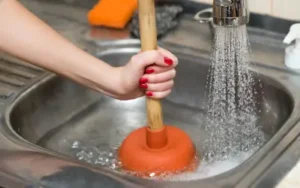 A plunger is a simple tool, but using it correctly is key. It uses water pressure, not air, to push and pull at a clog until it breaks free.
- How to do it: For a sink or tub, make sure you have enough water in the basin to cover the rubber cup of the plunger. If it’s a double kitchen sink, plug the other drain with a wet rag. For a bathroom sink, do the same for the overflow hole. Place the plunger cup firmly over the drain to create a tight seal and begin plunging with steady, vigorous up-and-down strokes for about 20-30 seconds.
Method 4: Dish Soap and Hot Water
If you’re dealing with a greasy clog in your kitchen sink, the degreasing agents in your everyday dish soap can be a powerful ally.
- How to do it: Squeeze a generous amount (about a quarter cup) of liquid dish soap into the drain. Let it sit for about 20-30 minutes, allowing it to seep down and coat the greasy blockage. Then, slowly pour a kettle of very hot water down the drain to flush the soap and the dissolved grease away.
Method 5: Using a Septic-Safe Drain Cleaner
We know the convenience of a store-bought drain cleaner is appealing. The good news is that not all drain openers are created equal. If you’re going to buy a product, it is essential that you choose the right kind.
- What to use: Enzymatic/Bacterial Cleaners. These modern cleaners use a blend of natural enzymes and beneficial bacteria that specifically digest organic waste like hair, grease, and food particles. Think of them as probiotics for your plumbing; they are not only completely safe for your septic system, but they can also contribute to its healthy bacterial balance.
- Read labels carefully: When you’re at the store, look for products that are explicitly marked “Septic-Safe” and mention terms like “Enzymatic Formula,” “Natural Bacteria,” or “Beneficial Microbes.”
Why You Shouldn’t Use Traditional Chemical Drain Cleaners in Your Septic Tank
Now that you know what to look for, it’s just as important to understand what to avoid. Those traditional drain cleaners that promise to dissolve clogs in minutes often rely on harsh, caustic chemicals that can wreak havoc on your septic system.
Here’s why you should leave them on the shelf:
- Destruction of Septic Biome: Harsh chemicals like sodium hydroxide (lye) or sulfuric acid work by creating a powerful and corrosive chemical reaction. This reaction obliterates everything in its path, including the essential bacteria your septic tank needs to break down solid waste. Without these bacteria, your tank can fill with sludge, leading to backups and drain field failure.
- Damage to Pipes: The intense heat generated by these chemical reactions can soften and warp PVC pipe joints. Over time, the corrosive agents can also eat away at older metal pipes from the inside, creating weak spots that eventually turn into leaks.
- A Temporary Fix That Causes Long-Term Issues: While a chemical cleaner might burn a small hole through a clog to restore flow temporarily, it doesn’t solve the underlying problem. The long-term damage it inflicts on your septic ecosystem and plumbing is a steep price to pay for a quick, incomplete fix.
Can I Clean My Drains and Septic System Myself?
There are few things more frustrating than a slow, gurgling drain that’s on the verge of backing up. This is doubly true for homeowners with a septic tank. Because your septic tank isn’t just a holding container – it’s a living ecosystem – you need a drain cleaning solution that won’t disrupt the delicate balance of beneficial bacteria that breaks down solid waste. The wrong solution for a simple clog can disrupt this entire system, leading to sludge buildup, foul odors, and even costly septic failures.
As long as you’re careful and you use safe drain cleaning methods, it’s worth a shot. By clearing the clog yourself, you’re getting a faster solution than you typically would when you call a professional and wait for a technician to come to your house.
But sometimes a professional plumber is needed. If you’re dealing with significant blockages, these methods might not work. And it’s important to know when to stop, step back, and call a plumber. This will prevent mounting frustration for you and ensure you don’t do anything that might damage your septic system or pipes.
When DIY Solutions Don’t Cut It: Signs You Need a Professional
If you’ve tried the safe methods above and the drain is still stubbornly clogged, don’t get discouraged. Some blockages are simply too severe or too far down the line for DIY solutions to handle. It’s time to call a professional drain cleaning if you notice:
- The clog persists after several attempts to clear it.
- Multiple drains in your house are backing up simultaneously.
- You hear gurgling sounds from drains or toilets when they aren’t in use.
- Foul sewage odors are coming from your drains or around your property.
- You’re dealing with an emergency. If water or waste is escaping anywhere on your property, call our emergency services team ASAP.
For Professional Drain Cleaning in Portland, Trust Speedy Septic
When you’re facing a clog that won’t budge, the expert team at Speedy Septic is here to help. We use professional-grade tools like drain snakes and high-pressure hydro jetting to remove even the toughest blockages quickly and effectively — all while being completely safe for your pipes and septic system.
Don’t risk the health of your plumbing. To schedule fast, reliable, and septic-safe drain cleaning in Portland, contact Speedy Septic today!
Back to Drain CleaningTips for Septic-Safe DIY Drain Cleaning in Portland OR and Vancouver WA
Also Serving Customers In These Regions