
Portland / Vancouver Metro - The Dalles - Hermiston OR & Tri Cities WA
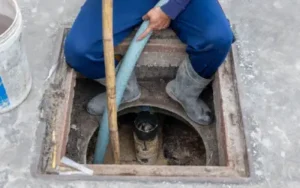 As a food service establishment (FSE), you’re legally bound to manage your fats, oils, and grease (FOG) in a safe and sustainable way. Oregon’s regulations on FOG are strict — you must not only have a properly sized system installed, but you must also keep it well-maintained. If not, you put your business at risk of a severe fine or other enforcement action.
To help you navigate these matters, we’ve put together this guide that demonstrates how to properly maintain a grease interceptor.
What Goes into Grease Interceptor Maintenance
Proper grease interceptor maintenance is more than just opening the lid and scooping out the top layer. It’s a systematic process to ensure the unit is working at peak efficiency and keeping FOG out of the sewer lines.
Here is a quick breakdown of the essential steps:
- Inspection: The first step is always a thorough check. We examine the interceptor’s condition, looking for structural defects, cracks, or clogs in the inlet and outlet pipes.
- Measurement: We use a dipstick or similar tool to measure the thickness of the floating FOG layer and the depth of the settled solids (sludge) at the bottom. This determines if pumping is necessary.
- Pumping/Hauling: If required, we fully pump out all contents—the liquid wastewater, the FOG mat, and the solids—into a sealed vacuum truck.
- Scraping and Cleaning: After pumping, we thoroughly scrape the interior walls, baffles, and piping to remove any lingering grease residue that could quickly build up again.
- Refill: The interceptor must be immediately refilled with clean water to return it to operating condition and prevent floating solids from settling too quickly.
- Documentation: We complete a detailed manifest (report) that records the FOG and solids depth, the volume removed, the date, and the ultimate disposal location. This report is vital for your compliance records.
Ready to talk to a septic system expert?
Click below and we'll call you back quickly!
How Often Should Pumping Or Cleaning Occur?
The frequency of grease interceptor pumping depends on the size of your unit and the volume of FOG your FSE produces.
Most regulations, including those in Portland, require cleaning before the accumulation of FOG and solids exceeds 25% of the interceptor’s liquid depth (this is the famous “25% Rule”).
If your establishment is particularly high-volume, producing a lot of grease and heavy solids (like a high-volume diner or a bakery), you will need more frequent service. Conversely, a low-volume coffee shop may have longer intervals.
| Interceptor Type | Required Minimum Cleaning Frequency (Portland Regulation) | Primary Trigger |
| Hydromechanical Grease Interceptor (HGI) | At least every 30 days | Reaching the 25% FOG/solids capacity |
| Gravity Grease Interceptor (GGI) | At least every 90 days | Reaching the 25% FOG/solids capacity |
Is There a Difference Between Pumping and Cleaning?
Yes, there is a major difference, and understanding it is critical!
- Pumping refers to using a vacuum truck to remove the FOG, solids, and wastewater from the interceptor.
- Cleaning is the necessary step after pumping, where technicians use hand tools, scrapers, and often high-pressure water to thoroughly remove all remaining grease stuck to the interior walls, baffles, and T-pipes.
Some companies only pump, leaving a significant, fast-building layer of residual grease on the walls. This causes your system to reach the 25% limit much faster.
At Speedy Septic, we believe in complete service. Our standard process includes both pumping AND cleaning because it ensures the maximum time between service intervals and keeps you in full compliance.
How to Conduct Maintenance Checks
As an FSE owner or manager, you should perform weekly visual checks to spot problems early and ensure continued proper grease management.
- Check for Water Flow: Look at the water level. Is the water level consistent? If water is draining slowly from your kitchen sinks, the interceptor or drain lines are likely clogging up.
- Inspect the Surface Layer: Open the manhole cover (carefully!) and use a stick or pipe to gently probe the surface. A healthy interceptor has a distinct layer of floating FOG. If you don’t see one, or if the layer is extremely thick and crusty, it may be time for service.
- Smell Test: A functioning interceptor should smell bad, but not acutely foul or rancid. A strong, immediate, putrid odor can indicate a blockage or a failure of the ventilation system.
- Check the Vents: Ensure the vent stacks on your roof are clear and not blocked by debris, which can impede proper airflow and cause odor issues.
What Is the “25 Rule”?
The “25% Rule” is the primary benchmark for deciding when to service your grease interceptor, and it is the standard used by Portland and most major municipalities.
It means that your grease interceptor must be pumped and cleaned when the combined volume of Fats, Oils, and Grease (FOG) on top and the settled solids (sludge) on the bottom reaches 25% of the interceptor’s total liquid depth.
For example, in a 1,000-gallon interceptor, if the total FOG and sludge layers add up to 250 gallons, it’s past time for service. Ignoring this rule means your system is no longer functioning effectively, leading to FOG bypassing the baffles and entering the public sewer system—a serious violation.
What You Can DIY and When You Need a Professional Grease Hauler
There’s a clear line between what you can do and what requires a professional grease hauling partner.
| Activity | Can You DIY? | Why/When to Call a Professional |
| Weekly Visual Checks | YES | You should regularly inspect flow, surface, and smell. |
| Minor Drain Clog | YES | Use a snake or plunger before the interceptor. |
| Adding Additives | NO | Portland regulations strictly prohibit the use of chemical emulsifiers, enzymes, or bacterial additives, as they only temporarily dissolve FOG, causing it to harden later in the main sewer line. |
| Pumping and Cleaning | NO | You must use a licensed, professional grease hauler who can properly document the removal and dispose of the FOG waste at an approved facility, as required by law. |
| Emergency Service | NO | For severe backups, you need a professional with specialized equipment to clear the blockage quickly and legally. |
Relevant Regulations
Maintaining your grease interceptor is not optional; it’s a non-negotiable legal requirement in Portland. Understanding the local regulations provides the necessary nuance:
- No Discharge – Ever: It is illegal to discharge any FOG directly into the sewer system.
- Additives Are Banned: Portland explicitly prohibits the use of any agent (enzymes, emulsifiers, etc.) intended to break down or digest FOG before it enters the sewer.
- Record Keeping is a Must: You are responsible for keeping detailed records (the service manifest) of all cleaning and maintenance for a minimum of three years and providing them to the City upon request (typically within 14 days of service).
- Unannounced Inspections Can Happen: City officials have the right to inspect your facility, including the interceptor, without prior warning to verify compliance.
How Grease Interceptor Maintenance Differs from Grease Trap Maintenance
While both systems manage FOG, they are designed for different jobs, leading to differences in their maintenance practices.
| Feature | Grease Interceptor (GGI) | Grease Trap (HGI) |
| Size/Capacity | Large, outdoor, underground (500–5,000+ gallons) | Small, indoor, under-sink or near floor (5–100 gallons) |
| FOG Volume | Designed for high-volume FSEs | Designed for lower-volume FSEs |
| Service Frequency | Less frequent (Every 30–90 days minimum) | More frequent (Often weekly to daily by staff) |
| Maintenance Type | Required by professional hauler/pumper only | Can be cleaned by staff or a professional |
A grease interceptor is a major piece of infrastructure requiring heavy-duty vacuum pumping. A grease trap requires smaller-scale pumping and cleaning. FSE staff may be able to do this in-house, but you may prefer professional grease trap pumping service.
The Stakes: Why Proper Grease Management Matters to Your Business
At the end of the day, Oregon FSEs are responsible for not polluting sewer systems with FOG. The consequences of poor grease interceptor maintenance are severe and directly impact your bottom line:
- Sewer Backups: Clogs cause sewage to back up into your facility, shutting down your operations, creating a health hazard, and requiring expensive emergency repairs.
- Heavy Fines: Failure to maintain records, improper disposal, or system failure can result in substantial fines from the city’s FOG enforcement program. These penalties can range from hundreds to thousands of dollars and may escalate to legal action.
- Compliance Orders: The city can issue Compliance Orders or even withhold services (like permitting for expansion) until violations are corrected at your expense.
Proper maintenance isn’t a cost—it’s an essential form of risk management and an important part of good business.
Let Us Help with Your Grease Interceptor Maintenance
Don’t let the complexity of FOG regulations and grease interceptor maintenance become a costly problem.
The key to keeping your business compliant, your kitchen flowing, and your profits safe is regular, professional service. As a licensed, preferred hauler in Portland, Speedy Septic provides complete grease interceptor pumping and cleaning services that guarantee compliance with local FOG regulations.
Call Speedy Septic today to schedule your next service or to learn more about our compliance-guaranteed services!
Back to Grease Interceptor Pumping
How to Properly Maintain a Grease Interceptor in Portland OR and Vancouver WA
Also Serving Customers In These Regions