
Main Takeaways
 Schedule a septic inspection before buying a house to avoid financial, health, and compliance risks.
- There are important differences between a septic inspection versus a home inspection.
- Watch for septic system red flags, such as slow drains or lush patches of grass.
If you’re considering buying a home with a septic system, it’s important to be informed before closing the sale. Beyond a typical home inspection, checking the septic system helps protect you from avoidable problems and costs later on.
What Should You Check Before Buying a House With Septic?
Here’s what to check when buying a house with a septic system to avoid costly and hazardous problems later on:
- Size: The tank’s capacity should be able to accommodate the house and number of occupants to avoid overload or system failures.
- Maintenance history: Check for regular servicing to avoid surprise repairs or replacements and verify the system’s condition.
- Location: Building, planting, or driving over a drain field or buried tank may damage the soil. The system should also have an identified location for a replacement drain field.
- Age: Septic systems usually last 15 to 40 years. Knowing the system’s age allows you to understand and prepare for a future replacement.
- Type: Septic system types have varying maintenance, operational, and lifespan differences. Alternative Treatment Technologies (ATTs) may require an active contract with a certified maintenance provider for the system’s lifespan.
Ask for the Septic System’s Records Before Closing
Asking for the system’s records as part of your septic system home-buying checklist:
- Original permit: Request the original septic system construction permit — if it’s unavailable, the system may have been installed prior to the requirement of permits, or it may be constructed illegally. Unpermitted septic systems may require replacement to avoid liability for public health hazards or pollution.
- As-built drawing: In addition to the original septic permit, as-built drawings confirm the system’s design, drain field size, and tank capacity.
- Inspection and service logs: Sellers should provide dated invoices and reports documenting the system’s pumping, inspections, repairs, and known issues.
- Incompliance notices: Local permitting offices may have records of the property’s unaddressed septic system complaints or violations.
What Septic Red Flags Should You Look for During a Home Tour?
Look for these septic red flags when touring a home.
Sewage or rotten-egg odors
Septic systems generate foul-smelling gases that smell of sewage or rotten eggs, and these gases should safely vent through your plumbing stack. Odors near drains or around the yard suggest that the septic system tank or drain field may be overloaded and pushing gases upward.
Slow drains or toilets
If multiple sinks, bathtubs, and toilets across the house drain slowly or create gurgling sounds when in use, the septic system may be overloaded or blocked. Sewer line obstructions, full septic tanks, and oversaturated drain fields prevent proper drainage, and trapped air makes gurgling sounds as it tries to escape.
Wet or soggy ground
Persistently wet, soggy, or spongy ground near the septic tank or drain field indicates that the system is unable to absorb the wastewater liquid. The drain field may be failing due to compaction or oversaturation.
Standing water near the drain field
Wet ground may escalate to standing water around the drain field in cases of critical septic system failure. This standing water likely contains sewage and poses an immediate risk of health hazards and groundwater contamination.
Unusually lush vegetation
Untreated wastewater contains high levels of nitrogen and phosphorus that’s nutritious for vegetation. When the septic system leaks or the drain field fails to filter effluent, patches of especially green or lush grass in the yard may appear.
Signs of previous septic repairs
Signs of previous septic repairs, such as freshly disturbed soil, patchy grass, or a new PVC cleanout pipe, may require a closer inspection. Repairs that don’t match the documented service history may be masking problems with quick fixes, or they may indicate unpermitted work that violates local regulations.
Is a Regular Home Inspection Enough to Check the Septic System?
A regular home inspection isn’t enough to check the septic system thoroughly. A home inspection excludes detailed evaluations of the underground system, and indoor drains may appear functional temporarily even while the drain field or tank are failing. A certified septic inspection involves specialized assessments, tests, and reports on the system’s function.
What Does a Septic Inspection Check Before a Home Purchase?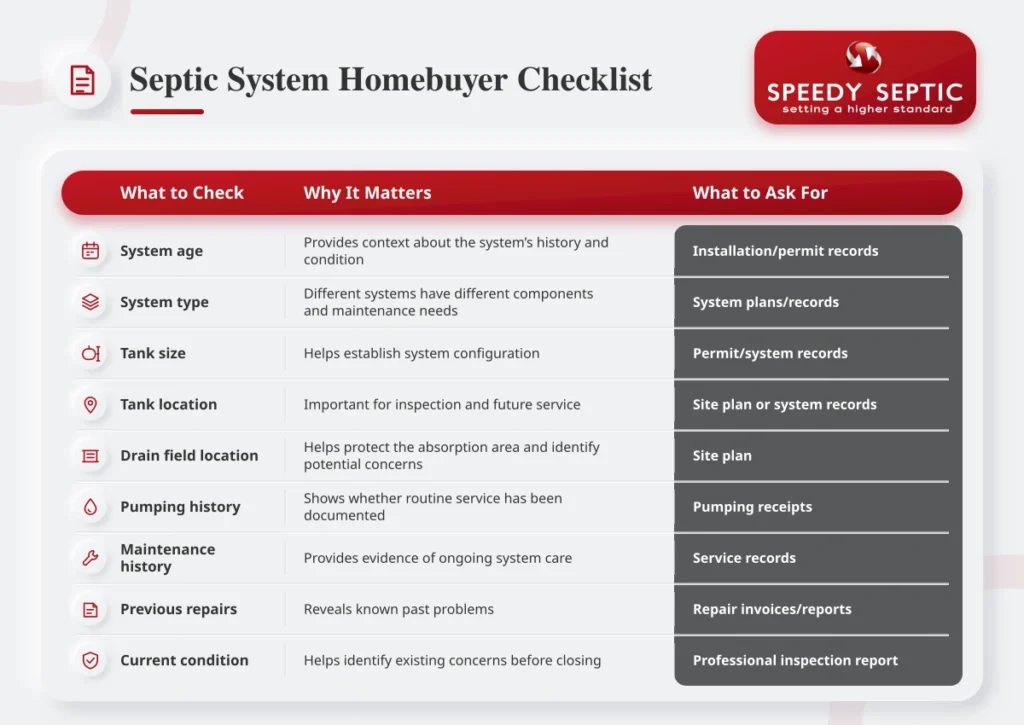
A real estate septic inspection with a certified contractor in Oregon before a home purchase checks:
- Septic maintenance records
- Permit and compliance records
- System age
- Tank sludge levels and scum thickness
- Signs of leaks in the tank
- Drain field condition
- Distribution box and drain line flow
What If the Septic Inspection Finds a Problem?
If the septic inspection finds a problem, the seller isn’t automatically responsible for repairs or upgrades. Some buyers negotiate a reduced purchase price based on the estimated repair costs or request that the seller hire a contractor to repair the problem before closing the sale. Others may purchase the home as-is without negotiating concessions if the problems are minor.
Should You Walk Away From a House With Septic Problems?
Consider these factors to determine whether you should walk away from a house with septic problems:
- Minor issues: A well-maintained septic system that’s due for pumping or only requires minor repairs usually carries minimal risk.
- Lender approval: Lenders may deny a mortgage application if the septic system is failing or non-compliant.
- Code violations: Older or unpermitted systems may not be eligible for simple repairs and instead require a full replacement.
- Financial constraints: If you’re unable to negotiate price reductions or repairs, ensure that you’re prepared to cover the cost of a major replacement.
What Should You Know About the Septic System After You Buy the Home?
There are certain responsibilities and maintenance rules to know about a septic system after you buy a home:
- Regular pumping and inspections: Schedule eco-friendly septic services every one to three years, depending on your contractor’s recommendations.
- Flushing: Only flush septic-safe waste — don’t flush trash, cooking oils, food scraps, or harsh chemicals.
- Drain field protection: Don’t drive or park vehicles over the drain field.
- Water usage: Be aware of and spread out your water usage to avoid overwhelming a system.
Schedule Your Septic Inspection Before Closing with Speedy Septic Today!
Before closing on your new home, contact us at Speedy Septic to schedule a septic inspection. Our certified septic inspections for home purchases include a 21-point stress test with documented reports and recommendations, helping to avoid major failures or liabilities and ensuring that homeowners are satisfied and fully informed.
Frequently Asked Questions
Should the septic tank be pumped before I buy the house?
Yes, the septic tank should be pumped before you buy the house. Septic inspections usually involved pumping the tank so that the technician can evaluate the walls, baffles, and pipes.
Who typically pays for a septic inspection when buying a house?
The buyer typically pays for a septic inspection when buying a house as part of their due diligence. Hiring an independent septic inspector provides you with an unbiased report of the system’s condition.
Is a septic inspection included in a regular home inspection?
No, a septic inspection isn’t included in a regular home inspection. General home inspections are visual evaluations of the home’s main components, such as plumbing fixtures and drains, though they may note clear septic system warning signs.